
Tylent Insight
Welcome to the Lyvra Community Tech Blog
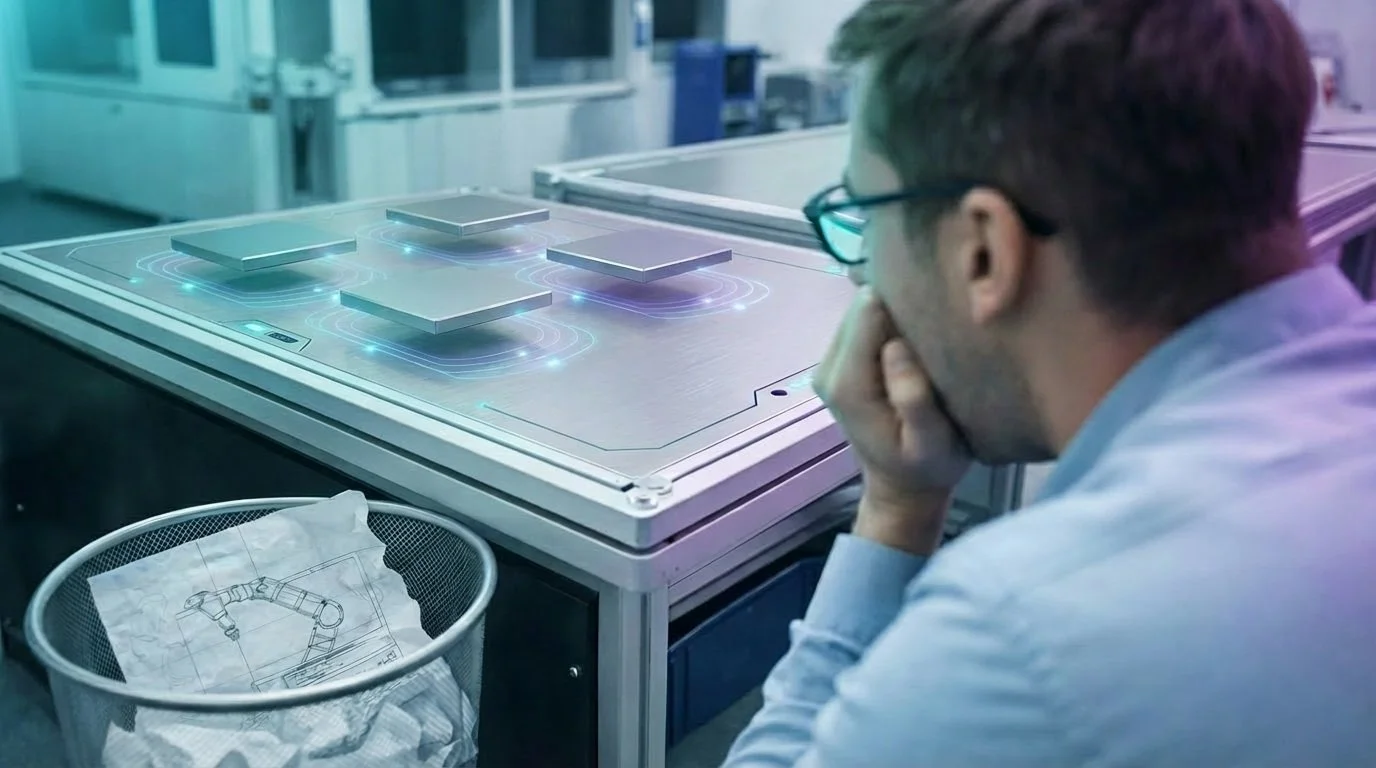
From Automation to System Design: Why Incremental Robots Are Not Enough
Automated i.v. compounding robots work—but they rarely transform the process around them. Most platforms replicate manual workflows inside robotic enclosures, preserving serial mechanics and human-dependent steps. The literature shows that these architectural choices create hard limits on throughput, scalability, and risk reduction. Incremental improvements refine machines, but do not change the system. Real progress begins when compounding is redesigned as an end-to-end automated process rather than a sequence of robotic tasks.
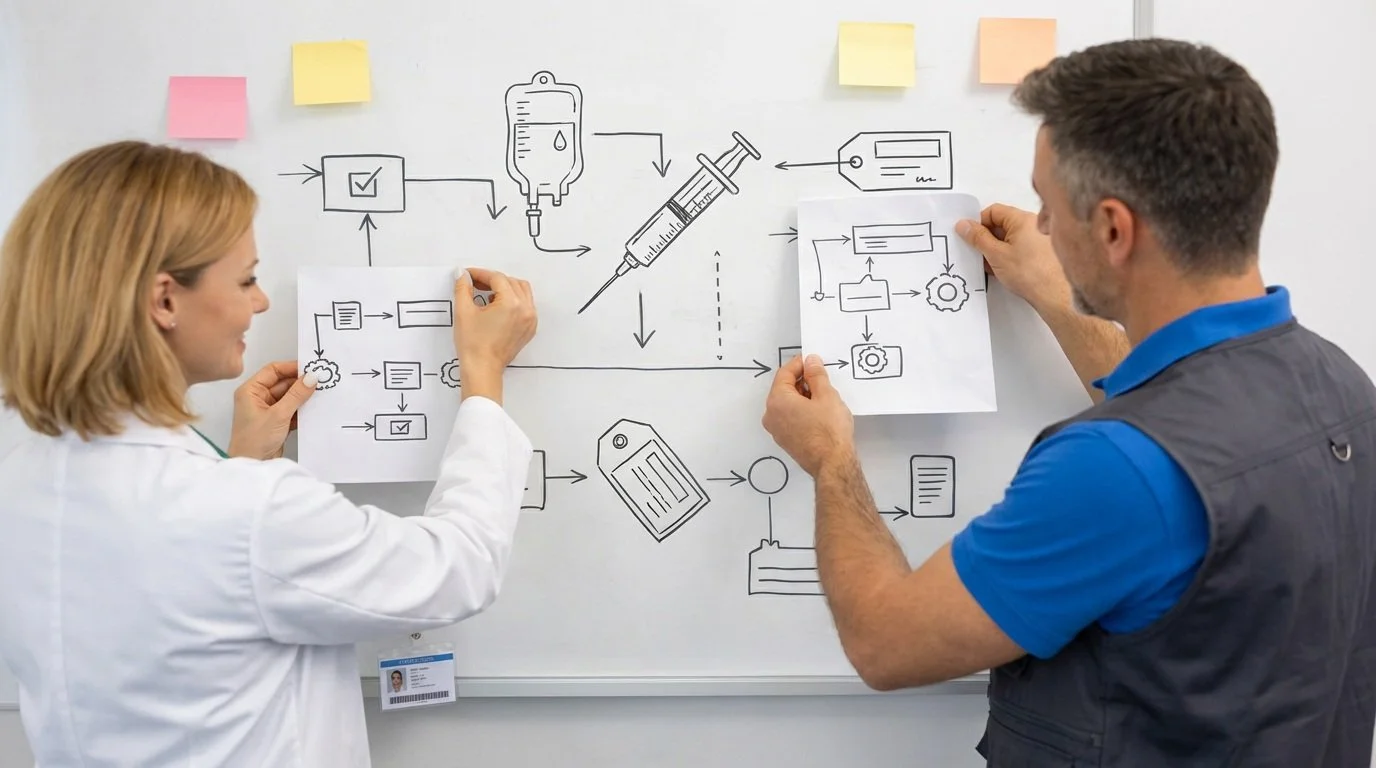
End-to-End by Design: Why Partial Automation Fails at the System Level
Most automated i.v. compounding systems stop where the robot stops. Everything before and after is labeled “workflow.” But that is exactly where risk, variability, and hidden costs accumulate. End-to-end automation is not a feature—it is a systems requirement.

From Automation to Care Delivery: Why the System, Not the Device, Matters
Automation has improved many steps of IV compounding—precision dosing, material handling, contamination control. But decades of experience show a clear lesson: technology improves outcomes only when it is designed as part of a broader care delivery system.
Devices optimize individual steps.
Systems ensure that therapy reliably reaches the patient.
When automation stops at the device boundary, fragmentation remains: manual coordination, duplicated safety controls, and pressure shifting between pharmacy and clinical staff. What matters clinically is continuity—from prescription to administration—under real operational conditions.
The next evolution of compounding automation is therefore not simply better machines, but systems designed to coordinate processes, absorb variability, and support care delivery end to end.

Orchestrated Intelligence: Why Automation Without Control Is Not Enough
In i.v. compounding, automation has greatly improved the execution of individual tasks—moving materials, transferring liquids, verifying doses. Yet as systems grow in scale and variability, the real challenge shifts from execution to coordination.
Workflows must constantly adapt to urgent doses, variable preparation times, and unexpected interruptions. In many systems, these decisions still rely on human intervention.
The next step is not simply more automation, but orchestration: systems capable of coordinating processes, balancing workloads, and responding intelligently to change.
Automation performs tasks.
Orchestration makes the system work.
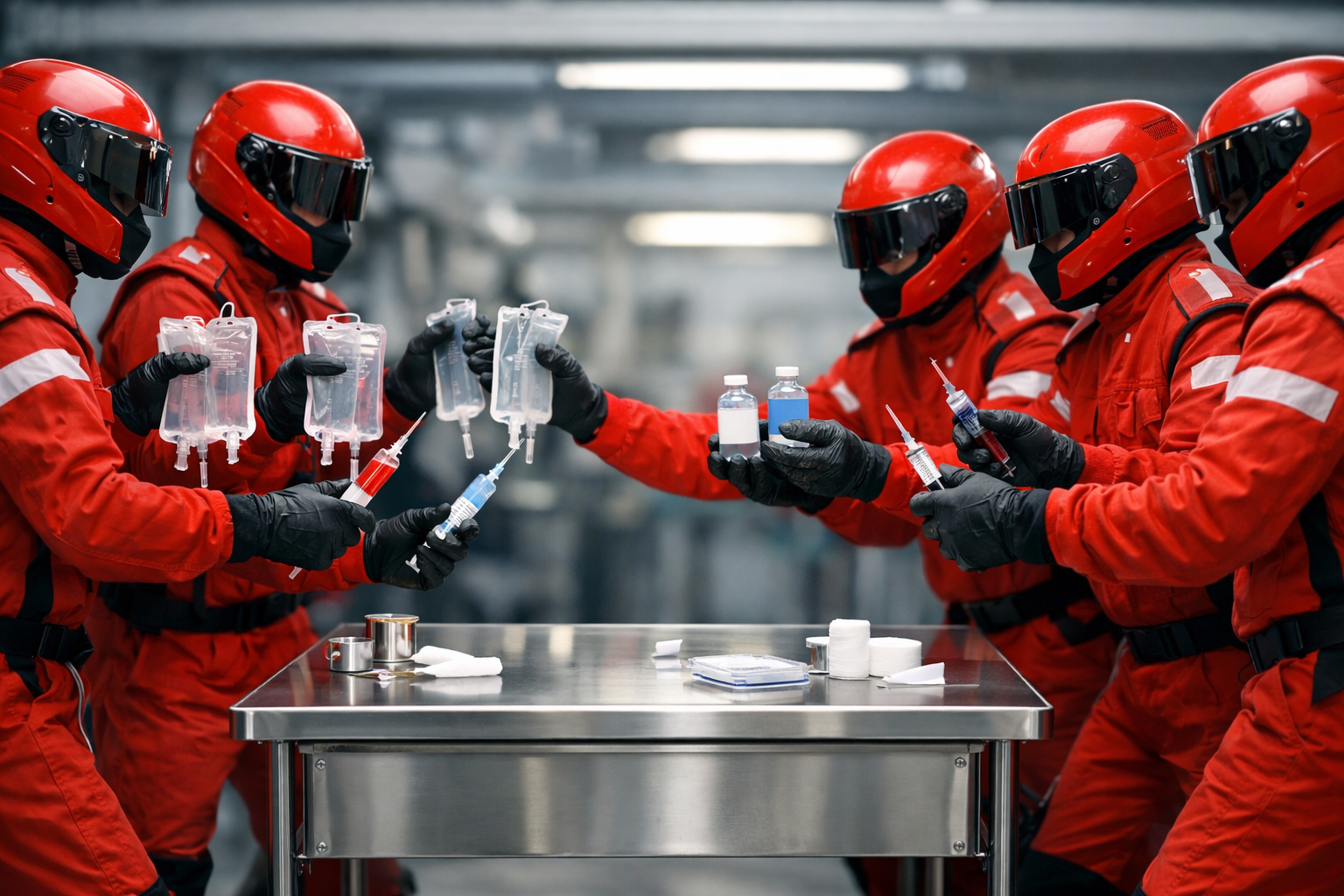
Designing for Parallel Processing: Why Throughput, Safety, and Robustness Converge
In i.v. compounding automation, performance ceilings are often treated as technological limits. In reality, they are architectural. Serial robots force materials, tasks, and decisions to wait their turn, making throughput fragile under real-world variability. Parallel system design removes this constraint, allowing operations to proceed independently and continuously. When processes stop waiting, throughput, safety, and robustness begin to converge.